Our product
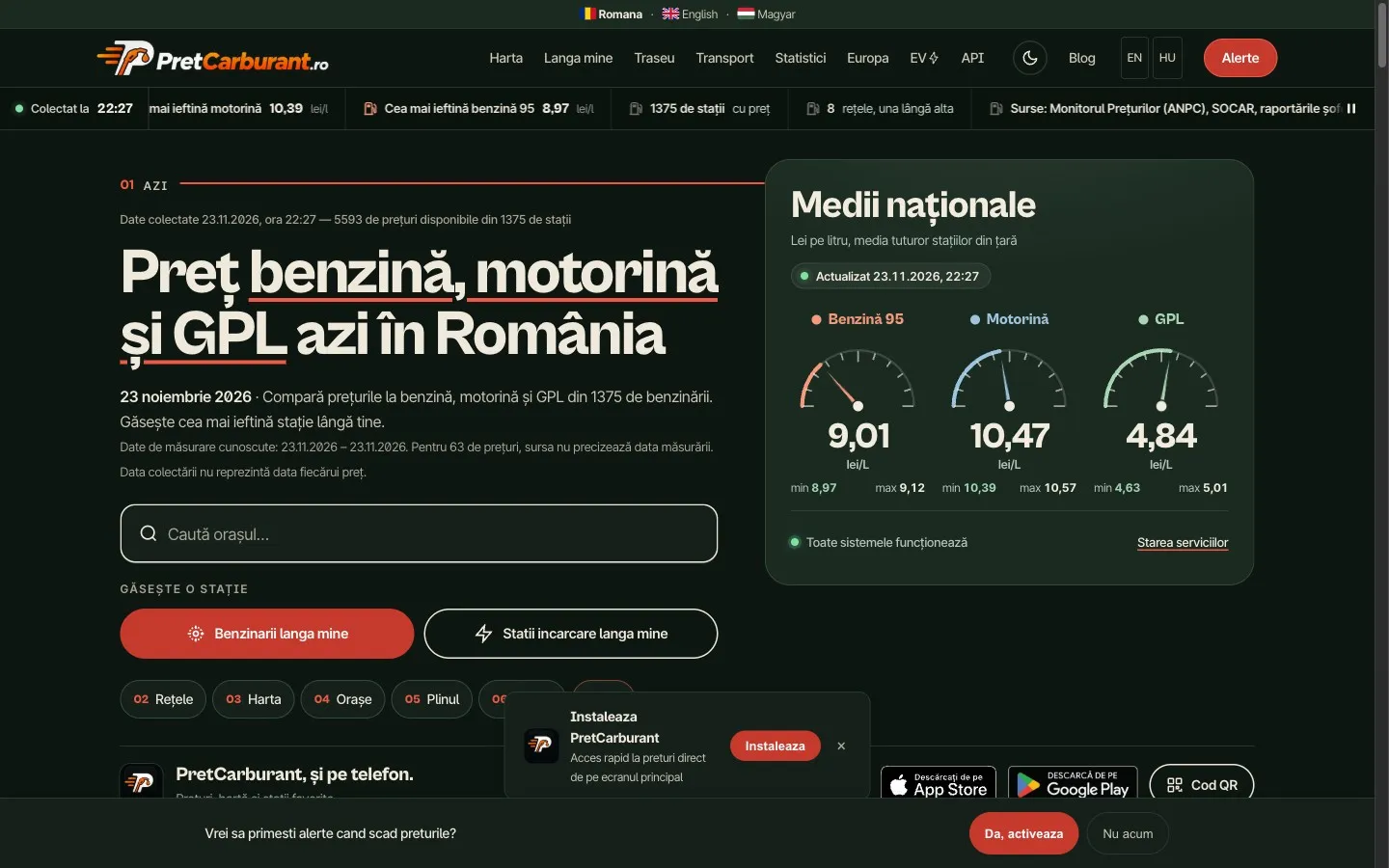
PretCarburant
Petrol, diesel and LPG prices in 6 countries, refreshed every 2 hours.

Fresh, checked data from websites, public feeds and official sources, delivered through an API or straight into your product.
Start a projectOur web scraping services cover the whole path from a source to a number you can use: collectors that gather data on a schedule, checks that catch bad records, and an API that delivers the result. We do this work every day in our own products. In PretCarburant, automated collectors refresh fuel prices every 2 hours for stations in 6 countries.
Copying data off a page once is easy. Data scraping services become useful when the same data arrives again tomorrow, in the same shape, with nobody watching. A typical project has four parts:
Typical uses are price monitoring across competitors or suppliers, product catalogues and listings gathered from many sites, locations with opening hours, and official figures that change every day. When the goal is to compare the same product across several sellers, matching records between sources matters as much as collecting them. We cover that on our page about price comparison platforms.
With PretCarburant, the challenge is frequency. Its collectors refresh fuel prices every 2 hours across 6 countries: about 1,500 stations in Romania, 2,038 in Bulgaria, 1,154 in Hungary and 615 in Moldova, with Greece and Turkey on top. Drivers can add their own price reports. Before each release, 11,874 automated tests have to pass, and the state of the service is shown on a public status page.
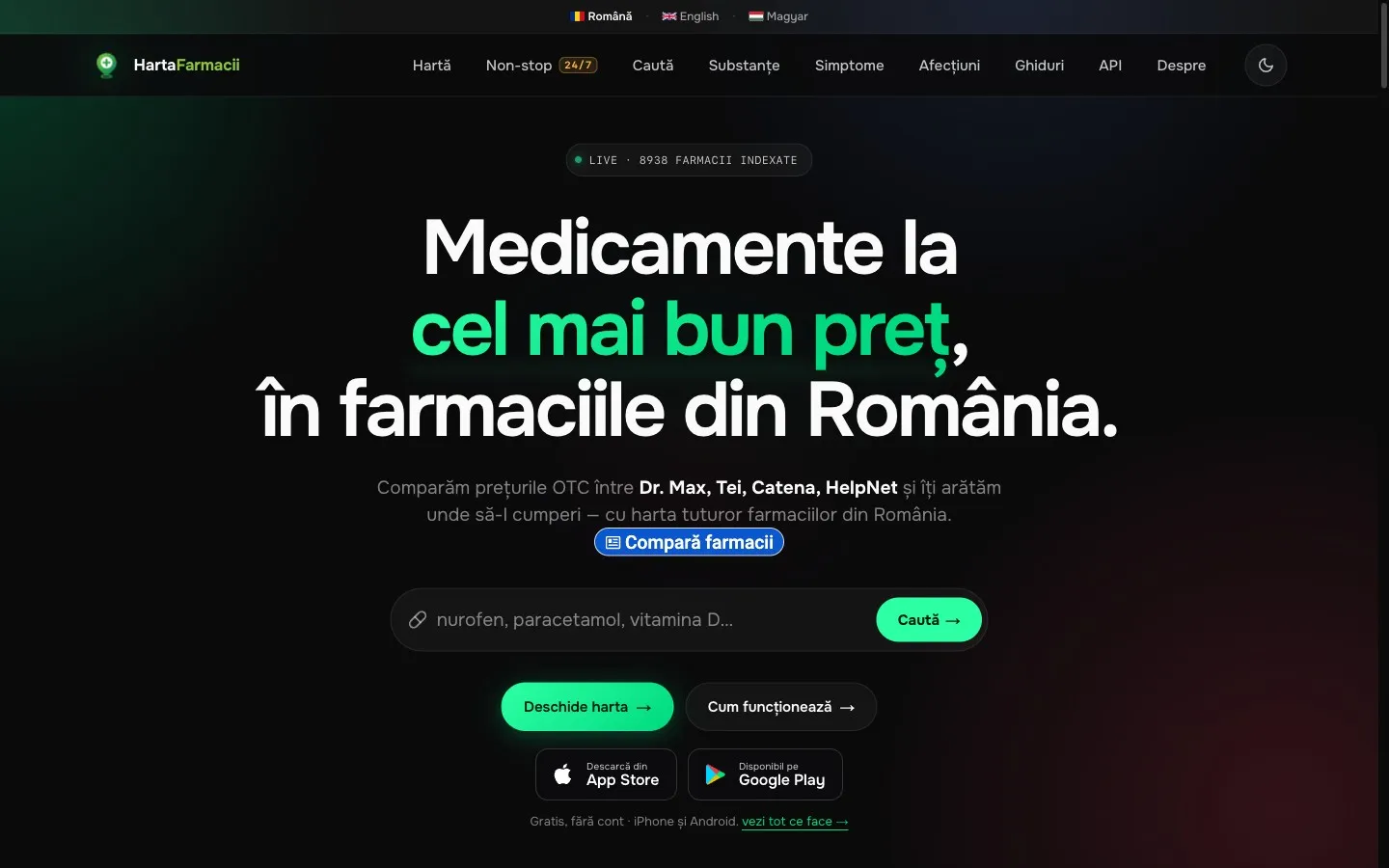
With HartaFarmacii, the challenge is volume. It keeps 85,568 products with a live price and compares the same product across pharmacy chains, which only works when records from different chains are matched correctly. For a price study in June 2026 we checked 62,773 products and found a typical gap of 41.4% between chains for the same product. Its status page checks 6 components every minute.
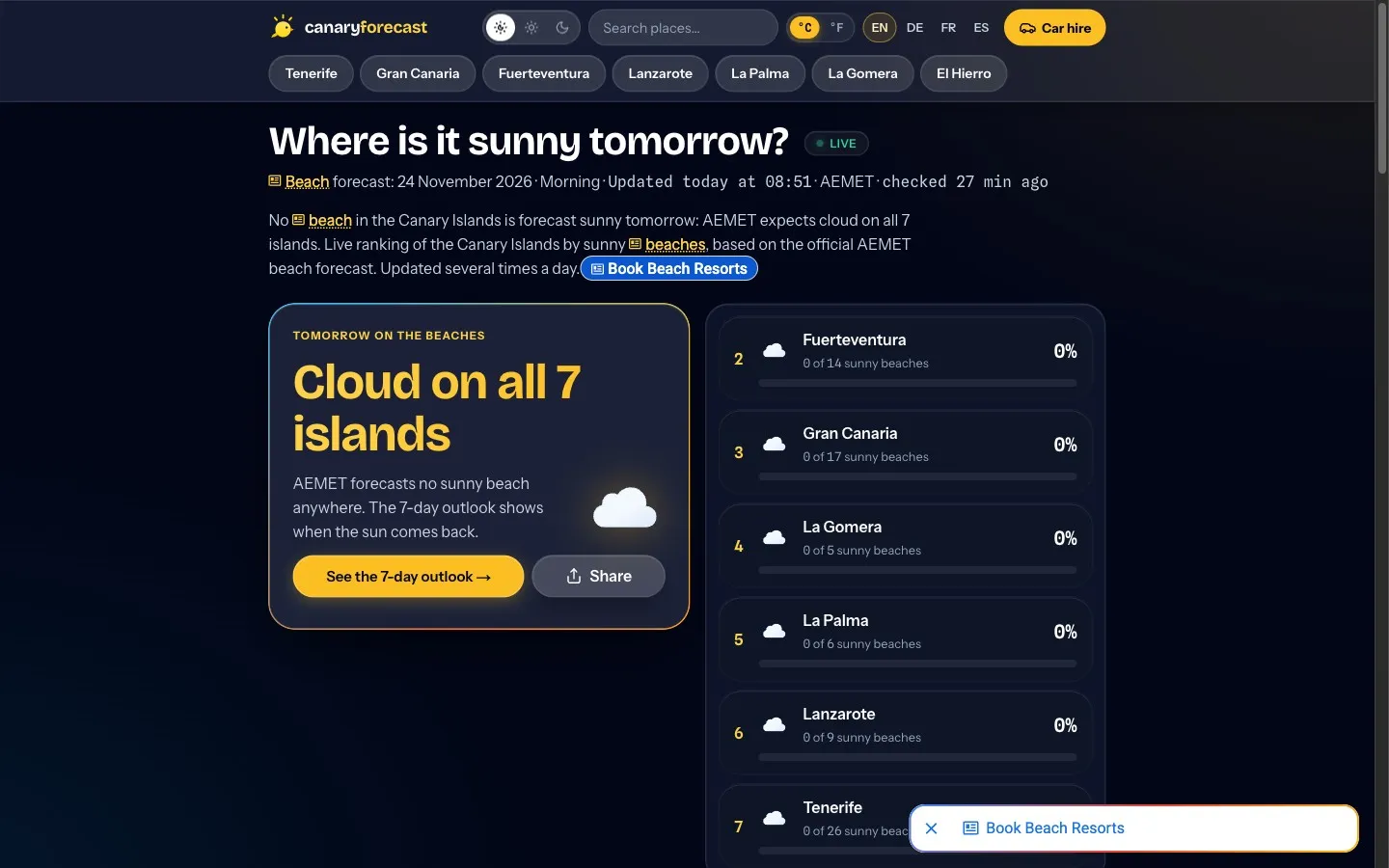
CanaryForecast is a problem of combination. It takes data from AEMET, MET Norway, ECMWF and Copernicus/CAMS and turns it into one answer per beach: sun, sea temperature, tides, Saharan dust and official warnings, for 80 beaches on 7 islands.
Most decisions are made in the free initial analysis. We go through the sources one by one and answer three questions for each: how the data is published, how often it changes and what a correct record looks like. Whether a source’s terms allow the use you have in mind is a legal question, and it has to be settled before the project starts.
You then get a fixed price for the whole project, before any work starts. We build the collectors, the checks and the API together with their automated tests, and set them to run as often as the data requires. After the final payment the source code is yours. Monthly maintenance is optional, but collectors are where it matters most: when a source rebuilds its pages, the collector has to be adapted. What such a project costs depends mainly on the number of sources and on how often they change, as the pricing page explains.
Our data products run on Python, a language widely used for data work, with mature tools for reading web pages, feeds and files. The APIs that deliver the data run on Flask. SQLite keeps the results in a single file that is easy to back up and move, and nginx or Cloudflare sits in front of the services.
Two things matter more than the language. First, a collector must never hide a failure. When a source changes and a field comes back empty, the system has to raise the problem instead of publishing a gap. Second, tests. A collector that runs every 2 hours has nobody sitting next to it, so automated tests and status checks do the watching.
If the collected data should also be shared or sold, the same team builds the API and its paid plans. See data, APIs and integrations.
Companies where someone checks competitor or supplier prices by hand. Products that depend on data from many sources: catalogues, listings, schedules. Teams that want to publish research based on collected data, as we did with the HartaFarmacii price study. And companies abroad looking for a web scraping company inside the European Union that also builds what comes after the data: the API, the web application or the map.
Data collection is one part of our custom software development work, next to business process automation for the documents and internal tools around the data. Tell us which data you need and where it is published. The free initial analysis starts with a message from the contact page.
Updated C&S Visionary Systems team
Prices, product catalogues, locations, opening hours and data published by official sources. Our own collectors refresh fuel prices for stations in 6 countries, and CanaryForecast combines data from AEMET, MET Norway, ECMWF and Copernicus/CAMS.
That depends on the source and on what you plan to do with the data. In the free initial analysis we look at each source you need. Whether its terms allow your intended use is a legal question, and it has to be settled before the project starts.
Through a REST API, or directly in the web application, map or dashboard built on top of it. PretCarburant, for example, serves its data through a free public API and paid API plans.
Each project has a fixed price, set after a free initial analysis of the sources, how often the data changes and the checks it needs. We do not publish a price list, because two data projects rarely need the same work.
The source code becomes yours after the final payment. Monthly maintenance after launch is optional, and it is what keeps a collector working when a source changes its pages; without it, your own team can maintain the code.
Tell us about it. The first analysis is free and you get a fixed price before any work starts.
Start a project