Client project
Corner4Candles
Cart, checkout, parcel lockers and an admin panel for a handmade candle brand.

Online stores built around your products: catalogue, cart, checkout, payments, delivery options and an admin panel, at a fixed price agreed before work starts.
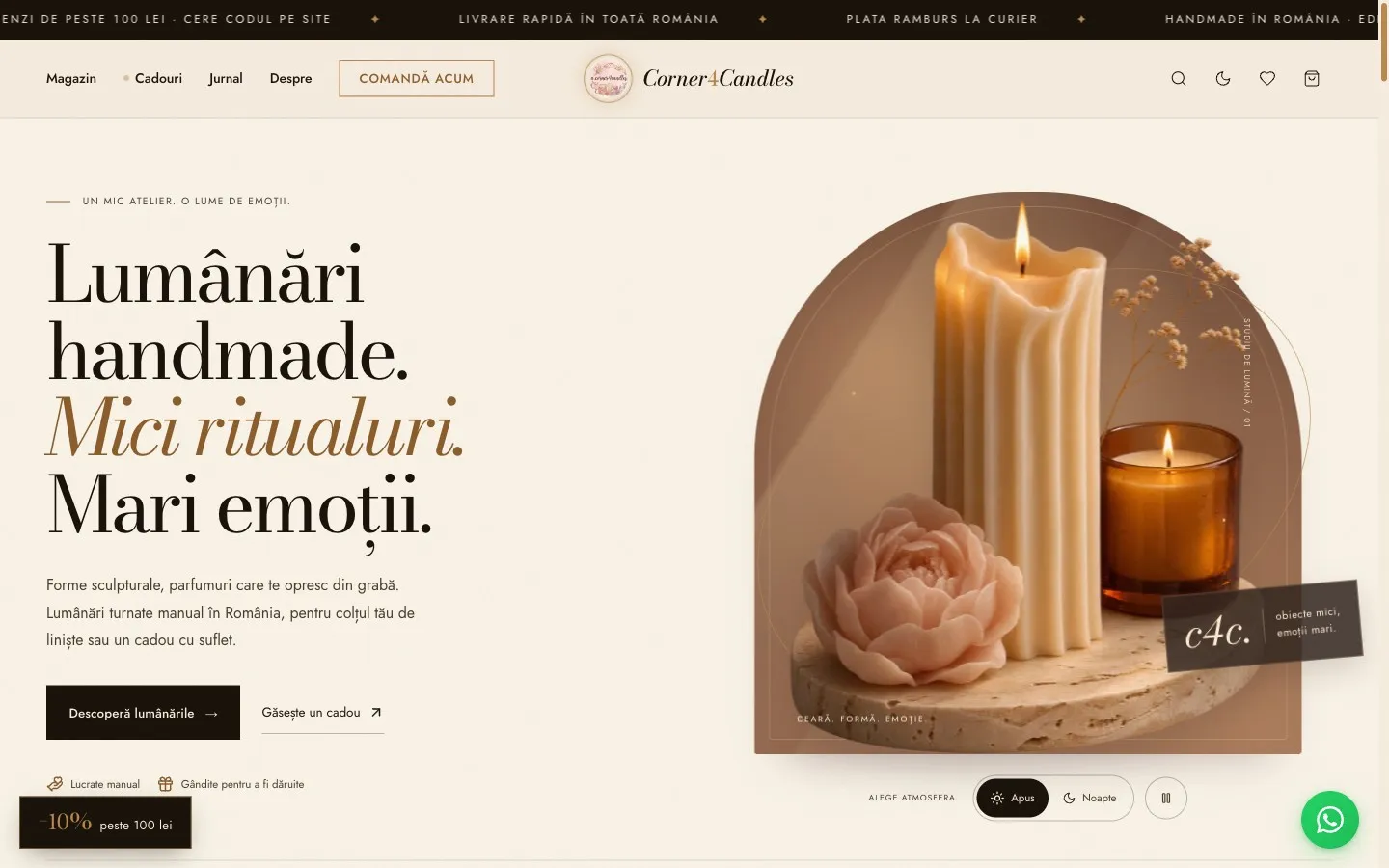
Start a projectWe do custom e-commerce website development: online stores written around your products, with the catalogue, cart, checkout, payments and admin panel shaped by the way you sell. The clearest proof is Corner4Candles, an online store we built and operate for a handmade candle brand, with 44 products, a parcel-locker picker, card payments ready to switch on and 435 automated tests.
A store is more than a product grid with a buy button. Most of the work goes into three places.
Around these sit the supporting parts: order emails sent automatically, a blog, discount offers and the information your products require, such as safety data sheets.
A template platform is a reasonable start when your products are standard and you want to open quickly. A custom store earns its place when the product needs choices that a theme shows badly, when checkout has to follow your own delivery process, or when you want to own the code instead of renting the shop. Stores are one part of our website design and development work.
Corner4Candles is an online store we built and operate for a handmade candle brand. It sells 44 products in 8 categories, with 12 scents and 88 colours to choose from. Handmade candles sell on detail, so the catalogue has to show many variations and still be easy to browse.
Buyers add products to the cart, check out and pick the parcel locker where they will collect the order. Today they pay cash on delivery. Card payments through Stripe are already built, so the brand can switch them on without new development. The store also has discount offers, a blog and safety data sheets for its scented products, and an admin panel runs it day to day.
A bug in the cart or at checkout costs orders, so the store is covered by 435 automated tests. We operate it after launch as well, so the brand works with one team for the code and for the daily running.
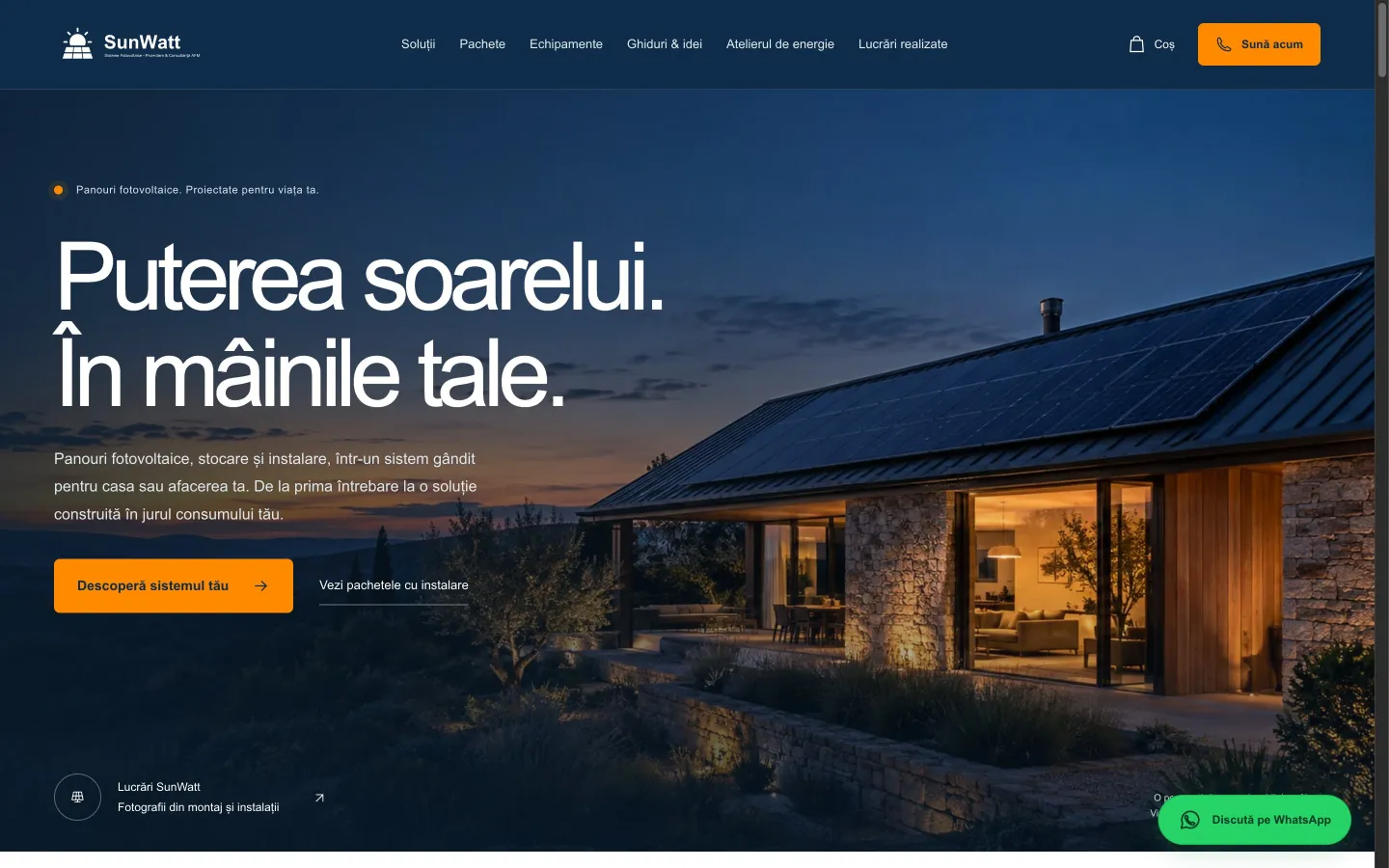
A store can also be one part of a larger site. SunWatt is client work for SUN WATT S.R.L., a solar installer. Its shop for solar packages sits next to a configurator that sizes a PV system from monthly consumption and generates a 3-page PDF offer. We describe that side of the work under product configurators and calculators.
It starts with a free initial analysis. We go through your products and how they vary, how you deliver, how buyers will pay and who on your team will handle the orders. From that you get a fixed price for the whole store, before any work starts. The pricing page explains what makes a store cost more or less.
We then design the catalogue and the checkout for phone and desktop, build the store with automated tests around the cart and the order flow, and launch it. After the final payment, the source code is yours. Monthly maintenance is optional.
Corner4Candles is a Next.js e-commerce build. Next.js and React can render product pages on the server, so buyers and search engines receive the complete page. TypeScript catches a whole class of mistakes before the code runs, which matters most in the cart and at checkout. Tailwind keeps the design consistent from the product grid to the order form. The catalogue and the orders live in SQLite, a small database that is easy to back up and move, accessed through Drizzle. Resend sends the store’s emails.
When a store takes card payments, we build them with Stripe. How we handle checkout, billing and paid plans is covered on the Stripe integration services page. The stack is not fixed: the SunWatt shop runs on PHP 8 and SQLite, like the rest of that site.
Brands whose products need explaining or come in many variations. Shops that have outgrown a template and keep bending their process around it. Service companies that want to sell packages online next to their main site. If you sell in several countries, the store can be planned from the start as a multilingual website.
Companies abroad looking for e-commerce developers in Romania get the same terms as everyone else. We are VAT-registered in Bucharest, in the European Union, and a store is handled like any other project: the free initial analysis first, then a fixed price, with the source code yours after the final payment. Tell us what you sell and how you deliver on the contact page.
Updated C&S Visionary Systems team
On a hosted template platform you rent a ready-made store and configure it. A custom store is written for your products and your order flow, and its source code becomes yours after the final payment.
Yes. We build card payments with Stripe. In Corner4Candles the card payments are built and ready to switch on, while orders currently use cash on delivery.
Yes. The store comes with an admin panel for the day-to-day work: products, orders and discount offers.
Each store has a fixed price, set after a free initial analysis of the catalogue, the checkout, the payment and delivery options and the content. We do not work from a price list, because two stores rarely need the same work.
You do. After the final payment the store's code belongs to you, and you choose whether to add monthly maintenance.
Tell us about it. The first analysis is free and you get a fixed price before any work starts.
Start a project